

Explore Manufacturing & Trades Courses
Start these programs in the Fall 2026 semester.
Rend Lake College's Manufacturing & Trades courses are designed for students who enjoy hands-on learning, problem-solving and creating something that lasts. Whether you're preparing for a career in welding, industrial maintenance, agricultural technology or manufacturing, these courses provide practical experience that employers value.
Our Manufacturing & Trades courses emphasize real-world skills through hands-on instruction and industry-relevant equipment. Students work alongside experienced faculty while developing technical knowledge that can lead directly to employment or continued study.
Agriculture
Agriculture is rapidly evolving through innovation and technology. From digital farming tools to agricultural engineering and precision equipment, these courses prepare students to meet the demands of a modern industry while building practical, hands-on skills.
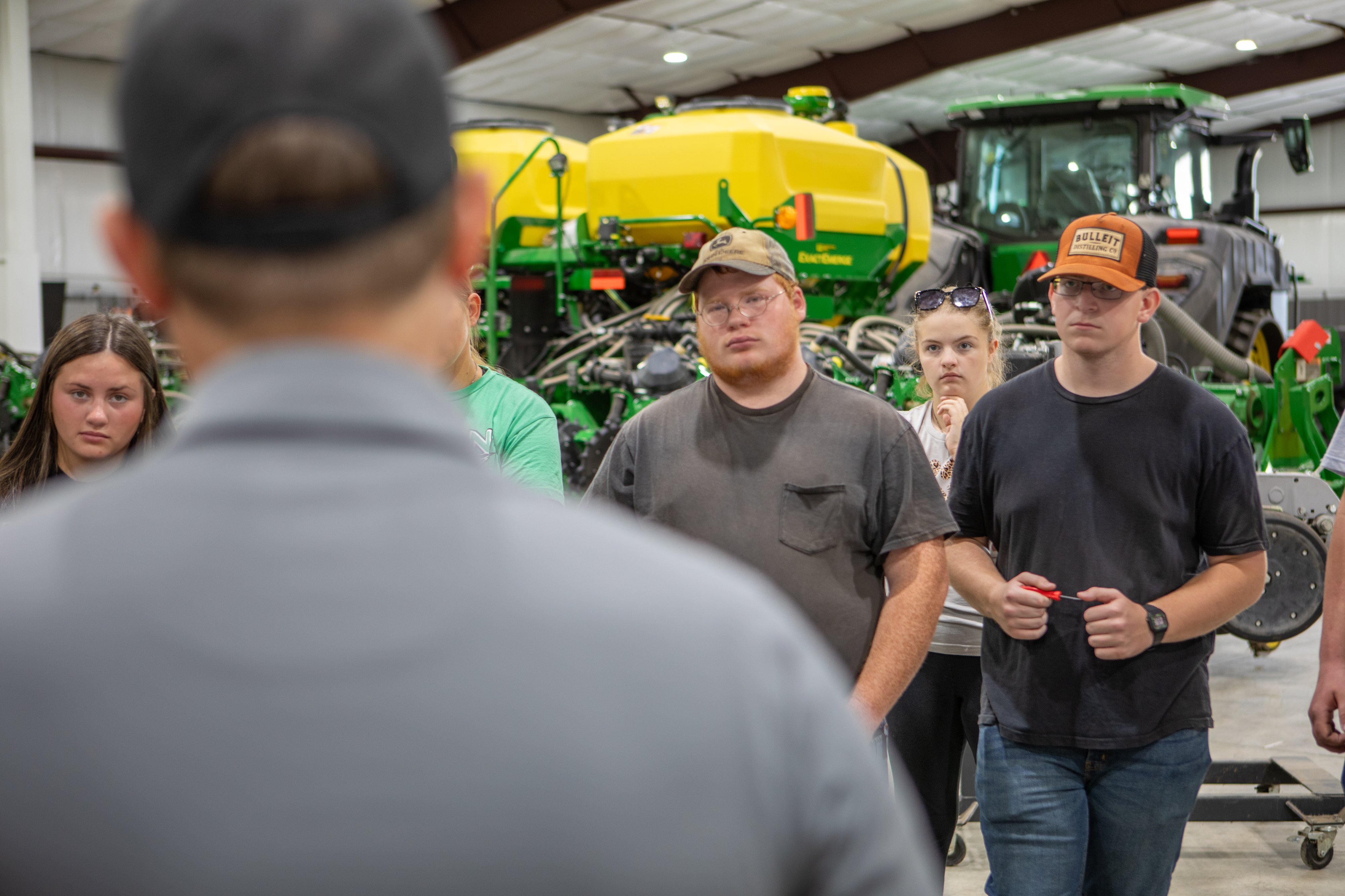
Whether you're interested in precision agriculture, equipment technology or digital farm management, these featured courses provide hands-on learning opportunities that prepare students for careers in one of the nation's most innovative industries.
- AGAT 1203–Autonomous Applications in Agriculture
Theory and application of autonomous equipment and solutions across all production steps will be covered. Instruction will include experience with equipment capable of performing tasks and making changes autonomously as well as how to maximize the functionality of the equipment. - AGAT 1200–Intro to Agricultural Engineering
Students will be introduced to the testing and applying of mechanical, hydraulic and electrical systems to manipulate variable rate technology in this course. Students will also receive hands on experience utilizing sensors and controllers to perform calculated outcomes for precise application rates. - AGAT 1201–Ag Tech Software Applications
This course is designed to introduce students to various digital platforms from the agricultural industry in order to make more intelligent farm management decisions. Students will get hands on experience using real agronomic data for better understanding of the digital farm. - AGRI 1205–Assembly, Adjustment and Maintenance
This course is designed to give the student a basic understanding of farm equipment design and adjustments for proper operation. Students will use operator and service manuals to adjust, maintain and repair agricultural machinery. Shop activities will develop skills needed for adjustment and reconditioning of farm-related equipment. - AGRI 1203–Ignitions and Electrical Systems
Theory, testing and servicing of electrical systems and components common to ag equipment will be covered. Instruction will include the use of modern testing equipment and procedures, procedures for home-farm use, rebuilding of components and safety procedures. - AGRI 1210–Supervised Occupational Experience
This course is offered in the summer for eight weeks following the first year of the program. The student will be placed with an agricultural business for full-time job placement. The learning experiences will be supervised by both
the college coordinator and the employer. The student will receive vocational counseling and individual assistance. Special attention will be given to career planning, on-the-job problems and current business practices. - AGRI 1214–Intro to Digital Farm Management
This course is designed to give students basic knowledge of various digital agriculture platforms to help carry out important farm management decisions based off of crop history and future planning. Projects will be completed utilizing Ag Technology in the classroom and in the field.
Interested in enrolling in the Agriculture program? Fill out the interest form below to get more information about the program.
Computer-Aided Drafting (CAD)
The CAD certificate combines creativity and technical precision to transform ideas into detailed digital designs. From mechanical and architectural drafting to 3D modeling, these hands-on courses teach students to use industry-standard software while developing the skills needed for careers in engineering, manufacturing, construction and design.
Whether you're new to computer-aided drafting or looking to expand your technical design skills, these featured courses combine creative problem-solving with practical applications to prepare students for careers in today's design and manufacturing industries.
- CAD 1201–Introduction to Computer-Aided Drafting
An elementary course designed to introduce the student to the basic operations of computer-aided drafting. These operations include, but are not limited to, shape descriptions, revisions and modifications of descriptions and the preservation of completed drawings. - CAD 1204–Computer-Aided Drafting Applications ~ Mechanical
A practical applications course designed to utilize and extend operations learned in CAD 1201. The course requires completion of drawings of machine parts and assemblies by orthographic section and auxiliary view techniques.
Interested in enrolling in CAD? Fill out the interest form below to get more information about the certificate.
Criminal Justice
Criminal Justice prepares students for rewarding careers dedicated to protecting and serving their communities. Through courses in criminal law, procedures, policing, corrections and private security, students gain a strong foundation in the justice system while developing the critical thinking, communication and practical skills needed for careers in law enforcement, public safety, corrections, forensic science and security services.
Whether you're interested in law enforcement, public safety, private security or criminal justice leadership, these featured courses provide hands-on learning opportunities that build a strong understanding of the justice system while preparing students for careers dedicated to protecting and serving their communities.
- CRJS 2206–Criminal Procedure
This course deals with the legal steps through which a criminal case passes, from the initial investigation of the crime to the determination of punishment. The rules of evidence (search and seizure) and the legally prescribed methods for effecting the arrest of criminal suspects will be subjected to detailed analysis. Constitutional guidelines will be emphasized. U.S. Supreme Court decisions in these areas will be reviewed. - CRJS 2204–Criminal Justice Administration
This course examines the organizational structures and administrative theories of criminal justice agencies. Other topics include: leadership and supervisory effectiveness; communication processes; organization conflict; decision-making, and problem-solving. Organizational effectiveness will be considered. - CRJS 2205–Police Weapons and Defensive Tactics
This course examines the various defensive weapons and tactics available to police, correctional and private security officers. Basic training skills will be taught using a variety of firearms, batons, flashlights, handcuffs, chemical agents, etc. The course will include an in-depth analysis of the current legal guidelines for the proper use of force when dealing with a dangerous or potentially dangerous adversary. - CRJS 1220–Introduction to Private Security
This course provides basic information to serve as an overview of the entire field as well as a solid foundation for future courses. A historical and philosophical perspective of private security will help students better understand
the present state of private security and its principles, legal authority and effect on society
Interested in enrolling in the Criminal Justice program? Fill out the interest form below to get more information about the program.
Culinary Arts
Culinary Arts blends creativity, technique and hands-on experience to prepare students for exciting careers in the food and hospitality industry. From fundamental cooking methods and baking techniques to menu planning and kitchen management, these courses help students build the practical skills, confidence and professionalism needed to succeed in restaurants, catering, hospitality and beyond.
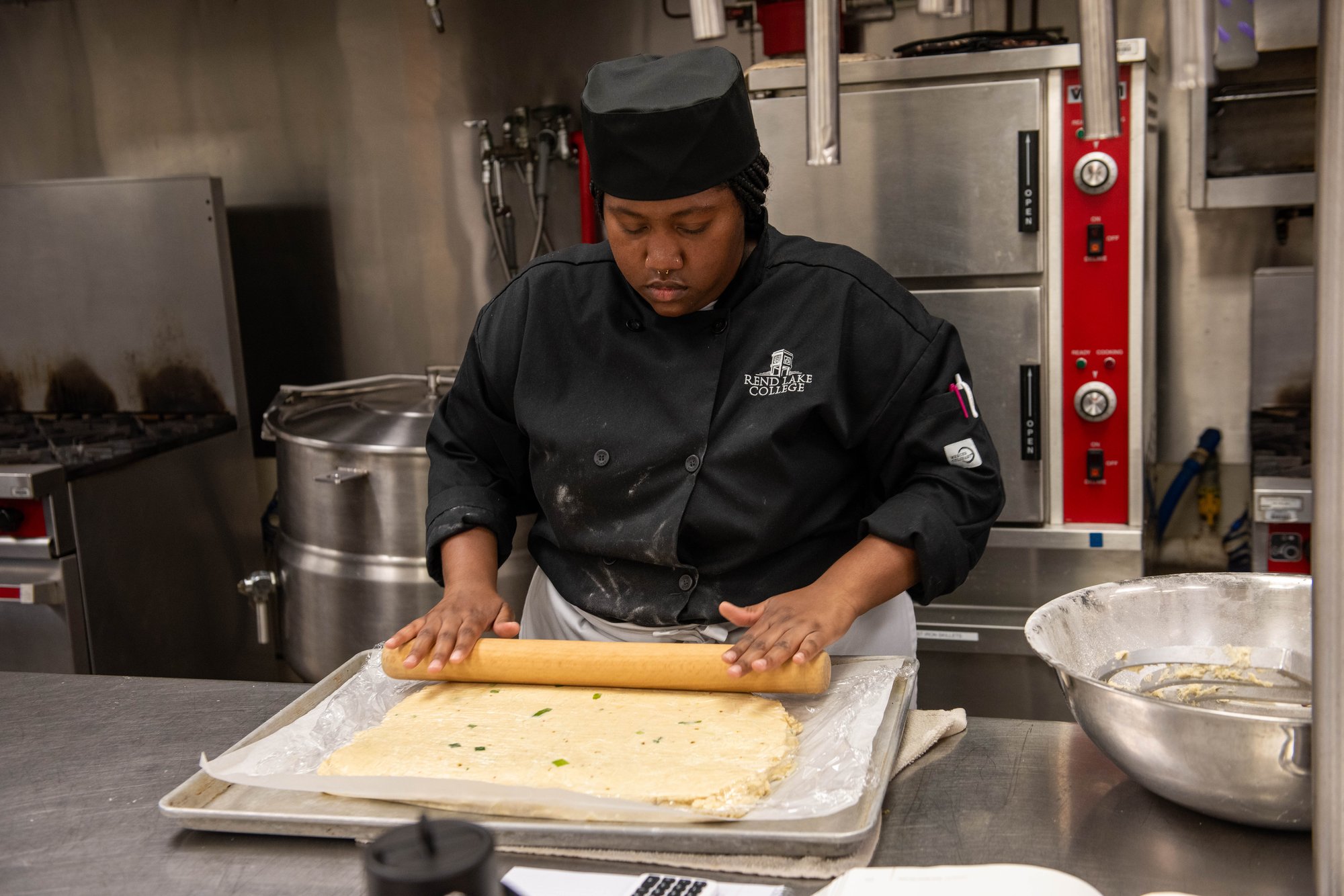
Whether you're passionate about baking, restaurant management, food safety or culinary innovation, these featured courses provide hands-on learning opportunities that develop the technical expertise, creativity and business skills needed for successful careers in the food and hospitality industry.
- CULA 2201–Professional Baking Techniques
This course addresses the fundamental baking skills required in kitchens and bakeries. Topics of study include identification of ingredients and equipment, Bakers Math, weight and volume measurement, and professional terminology. Essential baking techniques include mixing methods and procedures for cookies, quick breads, pies and tarts, creams and custard-related sauces, meringues, pate choux, yeast leavened breads, and the basic preparation and decoration of cakes. Emphasis is placed on sanitation practices, kitchen safety, palate development
and flavor profiling. Bakeshop management, cost control, and workflow will be included throughout this course. - CULA 2205–Restaurant Cost Control
This course is designed to provide the student with critical knowledge of food, beverage, and labor cost control procedures and methods. Implementing control measures, calculating costs, taking corrective action, and evaluation of the control process will be covered. The course will also stress control tools, budgets, purchasing and receiving controls, production control, labor and sales controls. - CULA 1207–Culinary Math
This course addresses the mathematical formulas and their applications typically used within the food service industry. Topics of study include identification and use of accurate measurement, measurement equivalents, portion controls, yield tests, recipe conversions, calculation of recipe costs, and food cost percentages. - CULA 1205–Food Sanitation
This course is designed to provide the educational background needed to assist the student in passing the required certification exam for the national ServSafe Food Protection Manager Certification. Topics of study will include: identification of microorganisms, symptoms common to foodborne illnesses and how illnesses can be prevented, time and temperature controls, fundamentals of good personal hygiene, major causes for food spoilage and food spoilage indicators, the flow of food throughout the establishment, facility sanitary and safety design, eradication of insects, rodents and pest, the use of cleaners and sanitizers, schedules and procedures, food codes and regulations. - CULA 1203–Professional Cooking III
The focus of this course is to expose students to a series of international cuisines through production techniques, preparations and presentations. Emphasis will be placed on ingredients, flavor profiles, and techniques representative of the cuisines studied. The class will also explore culinary history, how cultural beliefs influence cuisines and their effect on current culinary trends and menu development. Vegetarian and vegan menus will be introduced as well. Emphasis is placed on individual as well as team production, sanitation, safety, knife skills, use of equipment, product identification, professional terminology, weights and measures, production timing, and station organization. - CULA 2202–Restaurant Management
The course focuses on developing skills in human relations, personal management, and evaluates styles of leadership in the context of hospitality management. The course also addresses the "nuts and bolts" of management: developing schedules and labor costs, the interview process, communication skills, job descriptions, training methods, employee evaluations, conflict resolution, time management and organizational techniques.
Interested in enrolling in the Culinary Arts program? Fill out the interest form below to get more information about the program.
Early Childhood Education
Early Childhood Education prepares students to inspire and support the growth of young learners through hands-on experiences and child-centered instruction. From child development and classroom management to curriculum planning and family engagement, students build the knowledge and practical skills needed for rewarding careers in preschool programs, childcare centers and early learning environments.
Whether you're interested in teaching, child development or shaping the next generation of learners, these featured courses provide hands-on learning opportunities that build the knowledge, observation skills and classroom experience needed for careers in early childhood education and beyond.
- EDUC 1101–Introduction to Education & Observation
This course provides an orientation to the profession of teaching, including an overview of American public education and responsibilities of a teacher. Includes historical, philosophical and sociological overview of education, its organization and structure; finances; curriculum; teaching/learning process; federal/state/local govern-mental responsibilities, current issues and trends, and awareness of multicultural issues. Students will be placed in schools in the district for 32 hours of clinical observation to help confirm a desire to pursue a teaching career.
Interested in enrolling in the Early Childhood Education program? Fill out the interest form below to get more information about the program.
Logistics & Operations Management
Logistics & Operations Management prepares students to keep products, businesses and global supply chains moving efficiently. Through hands-on learning in supply chain management, transportation, procurement, operations and distribution, students develop the analytical, technical, and leadership skills needed for careers in manufacturing, logistics, warehousing, purchasing, and operations management while gaining preparation for industry-recognized MSSC certifications.
Whether you're interested in supply chain management, transportation, procurement or business operations, these featured courses provide hands-on learning opportunities that develop the analytical, technical, and problem-solving skills needed to keep products, businesses and global supply chains moving efficiently.
- LGOM 1200–Introduction to Supply Chain Management
This course introduces fundamental concepts, tools, and strategic importance of supply chain management. Focus is placed on how organizations design, manage, and improve processes that transform inputs into goods and services and coordinate activities across the supply chain. Students will also prepare for the MSSC Certified Logistics Associate certification Exam. - LGOM 1201–Transportation and Logistics
This course examines transportation logistics systems. Different modes of transportation are examined as well as security, rules and regulations, documentation, and emerging issues such as reshoring. - LGOM 1202–Principles of Operations Management
This course introduces the principles and practices of operations management in manufacturing and service organizations. Emphasis is placed on process analysis, forecasting, quality management, capacity planning, inventory control, supply chain management, and lean operations. Students will also prepare for the MSSC Certified Logistics Associate certificate. - LGOM 1203–Physical Distribution and Security Regulations
This course provides a comprehensive examination of logistics and distribution management within modern supply chains, emphasizing the strategic, tactical, and operational decisions required to efficiently move goods from origin to consumption. The course integrates concepts, planning frameworks, analytical tools, and emerging technologies to address the complexity of global and omnichannel supply chains. Students will also prepare for the MSSC Certified Logistics Technician certificate. - LGOM 1204–Global Supply Chain Economics
The course explains the economic foundations of global supply chain operations using the EPIC framework to evaluate the supply chain potential of different world regions. The course will combine economic analysis with political and infrastructure considerations to understand how global environments shape strategic supply chain decisions. - LGOM 1205–Procurement and Contract Management
This course provides a comprehensive introduction to Purchasing and Supply Chain Management, examining the critical role purchasing plays in achieving organizational efficiency, competitiveness, and long-term value creation. It explores both the operational foundations and strategic dimensions of purchasing within integrated supply chains.
Interested in enrolling in the Logistics and Operations Management program? Fill out the interest form below to get more information about the program.
Visual Communication Design
Visual Communication Design combines creativity and technology to turn ideas into compelling visual experiences. Through hands-on projects in graphic design, photography, typography, branding, digital media and layout design, students develop the artistic and technical skills needed for careers in advertising, marketing, publishing, multimedia and visual communications.
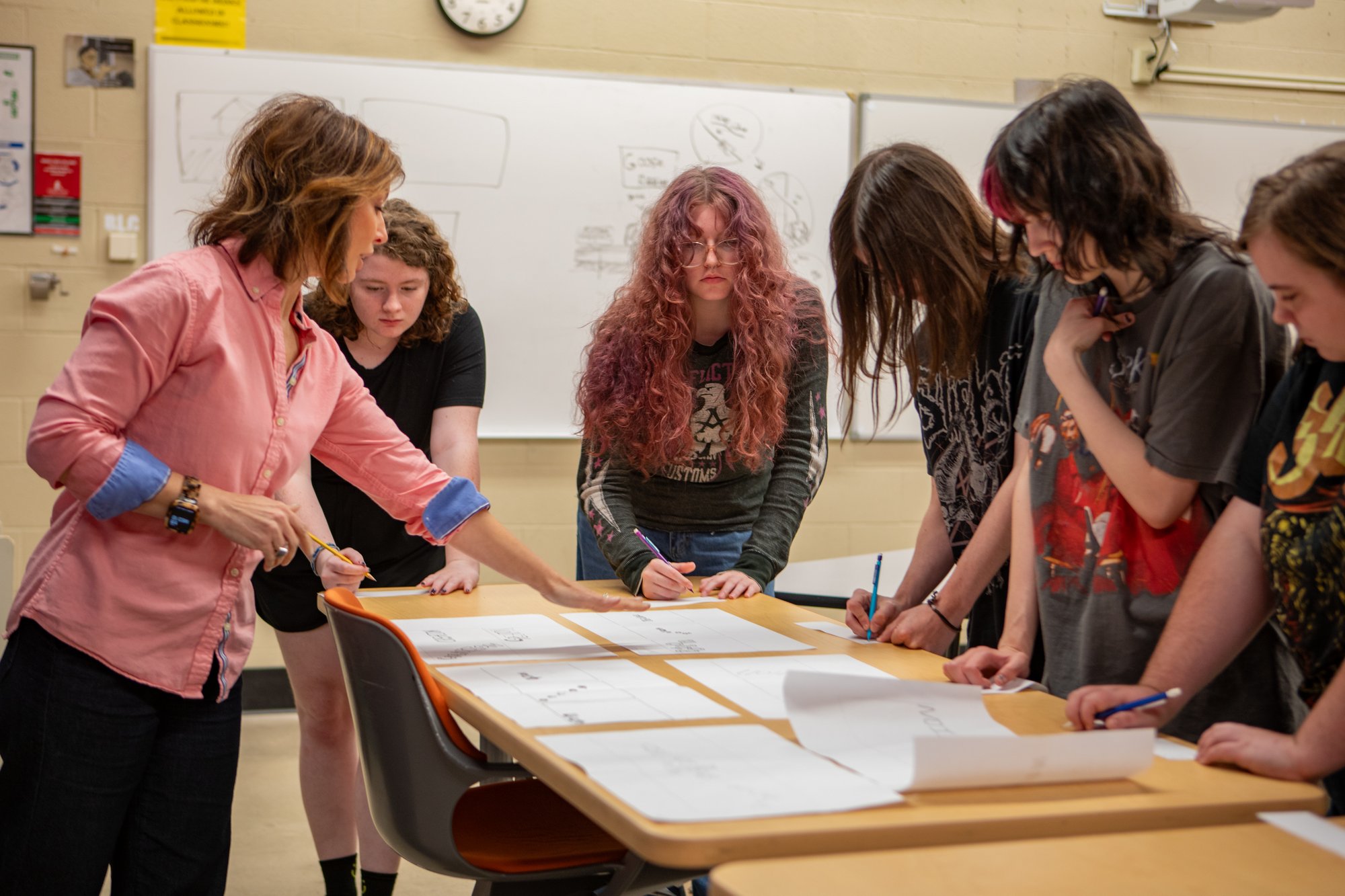
Whether you're interested in graphic design, typography, motion graphics or digital media, these featured courses provide hands-on learning opportunities that build the creative, technical and problem-solving skills needed to bring ideas to life and prepare for careers in visual communication and design.
- GRD 1201–Introduction to Graphic Design
Introductory course which offers training in the use of two–dimensional processes of design, elements and principles, concepts, materials, styles and terminology. Design projects produced with emphasis on content application, concept, and composition utilizing creative problem solving through the design process for visual problems. - GRD 1205–Drawing for Communications
This course is an introduction to drawing fundamentals for graphic designers which are applicable for logo design, storyboarding, concept development and finished work. Skills and topics covered include hand-eye coordination, direct observation, drawing from memory, drawing from reference, proportion, perspective and composition. Students will apply techniques ranging from quick-sketch to rendering while developing drawing skills using line, shape, form and color of images in a representational format for successful communication in design. - GRD 2209–Computer Type Design
An advanced typography course with problems in combining of typefaces, type as image, advanced techniques for emphasis, composition and their applications in a variety of design projects. Emphasis on professional-level type for print with an emphasis on publication design, grid systems, legibility, readability, typographic hierarchy, style sheets and multi-page documents. Introduction to animated type and motion graphic incorporation utilizing industry standard software. - GRD 1202–Typography and Color Theory
Introduction to typography with emphasis on letterform design, analysis of classical typefaces through the history of type, type anatomy, form and application utilizing spacing, type color and compositional balance and tension. The color theory portion discusses the psychological and cultural aspects of color, color systems with emphasis on color properties and interaction within a design and end user. - GRD 1209–Motion Design I
This course explores time-based media and essential principles of motion design through exercises in creative problem-solving, composition, digital media, movement, idea generation and collaboration. Various techniques used to create ideas in motion include drawing, photography, video, audio and animation. Emphasis on movement, metaphorphosis, transition, sequential, time and rhythm, pace, and editing. This course will include introductions to
software such as Adobe Photoshop, Premiere, and After Effects, as well as Mac OS. - GRD 2201–Adobe Essentials I
This course is the first course in the Adobe Essentials series: Adobe InDesign, Adobe Photoshop and Adobe Illustrator. This course introduces the basic use of tools in Adobe Photoshop, Adobe Illustrator, Adobe InDesign and other Adobe essential software. Students will learn the fundamentals of the programs utilizing tutorials and class projects. - GRD 2220–Adobe Essentials III
This course is a continuation of the Adobe Essentials series: Adobe InDesign, Adobe Photoshop and Adobe Illustrator. Students will construct complex documents integrating all three software applications utilizing previous software knowledge and honing the skills they have developed thus far in the Adobe Essential series. These projects may consist of tutorials, assignments / projects as well as real-world projects requested by the college, community and business industry.
Interested in enrolling in the Visual Communication Design program? Fill out the interest form below to get more information about the program.
Welding Technology
Welding Technology provides hands-on training in the techniques and processes used across today's manufacturing, construction and industrial industries. From shielded metal arc and gas tungsten arc welding to pipe welding and fabrication, students develop the technical skills, precision and safety knowledge needed for rewarding careers as skilled welders, fabricators and metalworking professionals.

Whether you're interested in fabrication, pipe welding or mastering advanced welding techniques, these featured courses provide hands-on learning opportunities that build the technical expertise, precision and safety skills needed for careers in manufacturing, construction and the skilled trades.
- WELD 1203–Gas Metal Arc Welding (GMAW)
This course is designed to give the student an overview of Gas Metal and Gas Tungsten Arc Welding processes used in general industry, construction, and fabrication industries with a concentration in auto body and production manufacturing processes where light gauge metals are used. The ability of GMAW and GTAW processes to weld nonferrous materials with high quality results will be stressed. - WELD 1204–Gas Tungsten Arc Welding (GTAW)
This course provides the student with a thorough knowledge of gas tungsten arc welding fundamentals, arc characteristics and welding safety. The course will include lecture and lab activities on the welding characteristics of carbon steel, stainless steel and aluminum. - WELD 1209–GMAW II
Concentrated instruction in Gas Metal Arc Welding for use in auto body and production manufacturing processes where light gauge metals are used. The ability of GMAW processes to weld ferrous materials in the horizontal and vertical up positions with high-quality results will be stressed. Students will learn in a combination of theoretical and practical sessions. Students must demonstrate course competencies through multiple assessments that simulate AWS code expected within the industry. - WELD 1210–GMAW III
Concentrated instruction in Gas Metal Arc Welding for use in auto body and production manufacturing processes. The ability of GMAW processes to weld ferrous materials in the overhead and vertical down positions with high-quality results will be stressed. Students will learn in a combination of theoretical and practical sessions. Students must demonstrate course competencies through multiple assessments that simulate AWS code expected within the industry. - WELD 1211–GMAW IV
Concentrated instruction in Gas Metal Arc Welding for use in auto body and production manufacturing processes. The ability of GMAW processes to weld ferrous materials in the horizontal, vertical, and overhead vee groove positions with high-quality results will be stressed. Students will learn in a combination of theoretical and practical sessions. Students must demonstrate course competencies through multiple assessments that simulate AWS code
expected within the industry. - WELD 1212–GTAW II
Concentrated instruction in gas tungsten arc welding (GTAW), which is also known as tungsten inert gas (TIG) welding. Students will learn the intermediate principles and techniques of GTAW in a combination of theoretical and practical sessions. Emphasis will be placed on safety, welding quality, and proper welding procedures. The student must demonstrate course competencies through multiple assessments that simulate AWS code expected within the industry. - WELD 2262–Pipe Welding I
This course is designed to familiarize the student with procedures for welding various size pipe in the 2G and 5G pipe positions, using E-6010 and E-7018 electrodes in preparation for destructive testing. - WELD 1205–SMAW II
Concentrated instruction in using different welding electrodes, electrode identification, and basic welding symbols. The course provides practical applications of AC/DC theory in fillet welds in the horizontal position. Students will be required to demonstrate course competencies through multiple assessments that simulate AWS code that is expected within the industry. - WELD 1206–SMAW III
Concentrated instruction in using different welding electrodes, electrode identification, and basic welding symbols. The course provides practical applications of AC/DC theory in the area of fillet joints in the vertical up position. Students must demonstrate course competencies through multiple assessments that simulate AWS code expected within the industry. - WELD 1207–SMAW IV
Concentrated instruction in using different welding electrodes, electrode identification, and basic welding symbols. The course provides practical applications of AC/DC theory in the area of fillet joints in the overhead position. Students must demonstrate course competencies through multiple assessments that simulate AWS code expected within the industry. - WELD 1208–SMAW V
Concentrated instruction in using different welding electrodes, electrode identification, and basic welding symbols. The course provides practical applications of AC/DC theory in the area of fillet joints in the vertical down position. Students must demonstrate course competencies through multiple assessments that simulate AWS code expected within the industry. - WELD 1201–Oxy-Acetylene Cutting (AOC)
This course is designed to give the student an overview of of oxy-acetylene welding processes used in general industry, construction, and fabrication industries. - WELD 1270–Introduction to Welding Processes
This course is designed to give the student an overview of the various metal-joining processes used in general industry, construction and fabrication industries. Processes include shielded metal arc welding, gas metal arc welding, oxy-acetylene welding and brazing and gas tungsten arc welding.
Interested in enrolling in the Welding Technology program? Fill out the interest form below to get more information about the program.
